Jakub Boksansky's Blog
Computer graphics
Cornell Box 2026
Here is a “Cornell Box 2026” GLTF scene - your good old Cornell Box with some light transport challenges added: normal maps, scratched and curved anodized anisotropic metal plate with iridescence, small light source surrounded by thin geometry and a thick glass block with many internal reflections throwing caustics. Ceramic block has a little recess for indirect lighting. There is also an environment map inspired by Figure 1 in Bruce Walter’s “Microfacet Models for Refraction through Rough Surfaces”.
The original credits belong to Cornell University, and please check out their “Modeling the Interaction of Light Between Diffuse Surfaces” from SIGGRAPH ‘84.
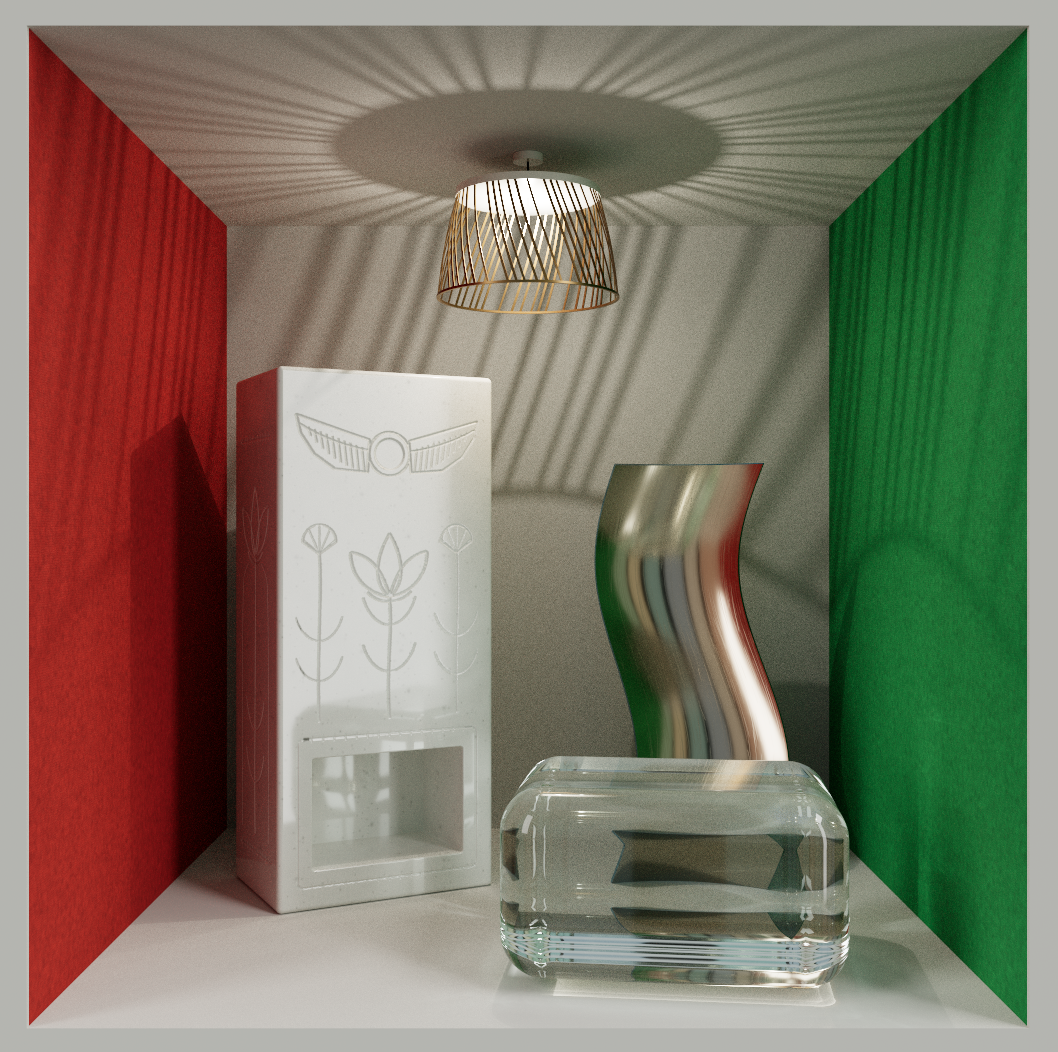
The scene
The scene brings several rendering challenges:
- Slatted pendant light. An emissive source inside the shade casts a pattern of narrow shadows across the ceiling and walls. The pendant contains 48 twisted fins surrounding a small cube-shaped emitter, 12 mm across.
- Glazed ceramic. A tall block combines decorative relief, a recessed opening, and varying surface roughness, providing a contrast between diffuse shading and glossy highlights. The Egyptian-inspired decoration on the ceramic block is actual geometry.
- Iridescent metal. Should be anodized titanium, let me know how close it is if you see one. The curved metal sheet combines anisotropic reflection with thin-film iridescence. Its changing surface orientation creates the angular variation in reflections and color. The metal’s scratches are encoded in its roughness texture, while anisotropy and thin-film iridescence are separate material properties.
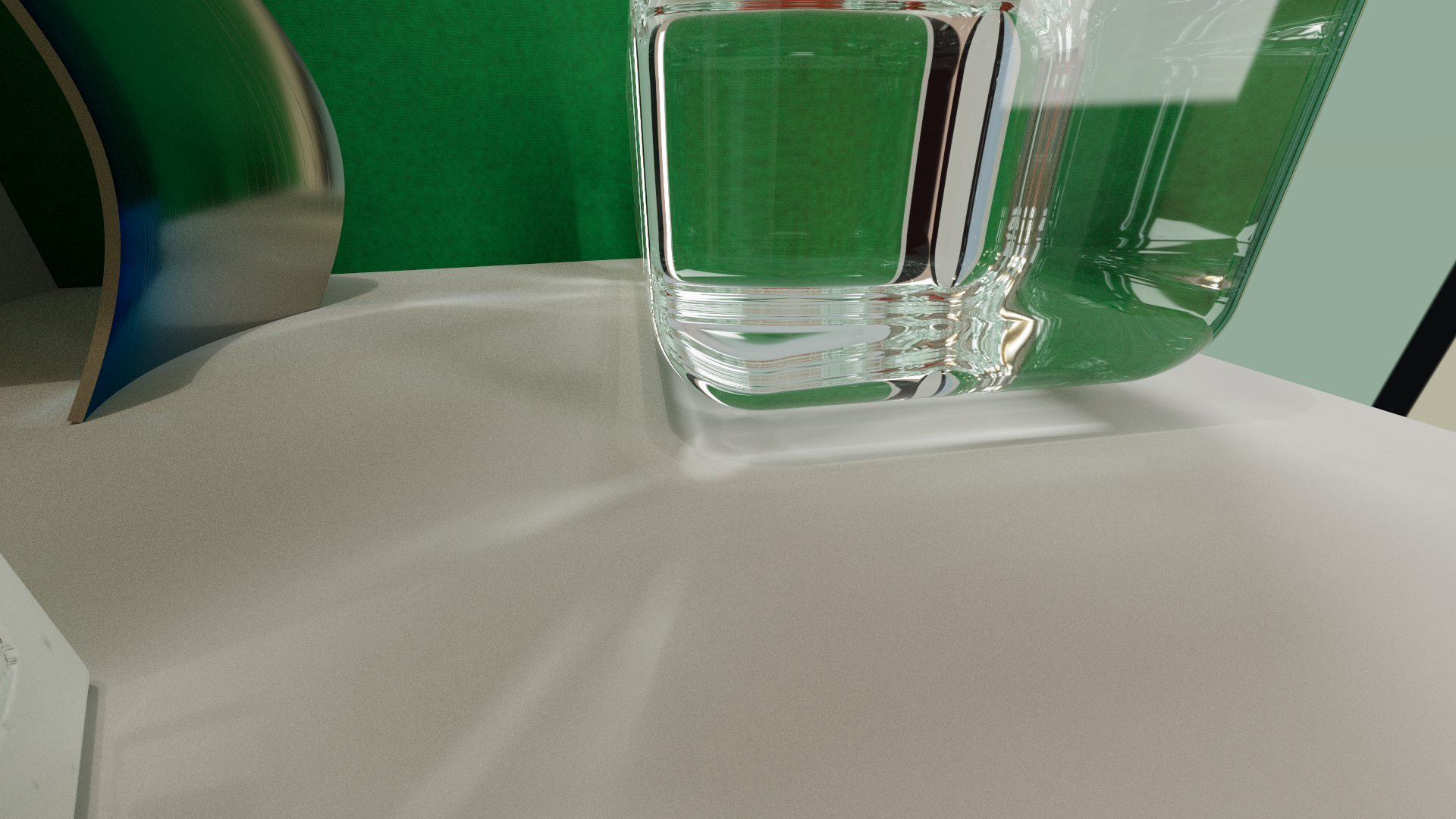
- Solid glass. A rounded glass block exercises refraction, Fresnel reflection, total internal reflection, absorption, and caustics. Its beveled edges provide additional paths through the material.
The red and green walls provide a familiar setting for inspecting color bleeding and indirect illumination - and are now normal mapped with carpet-like structure.
Renders
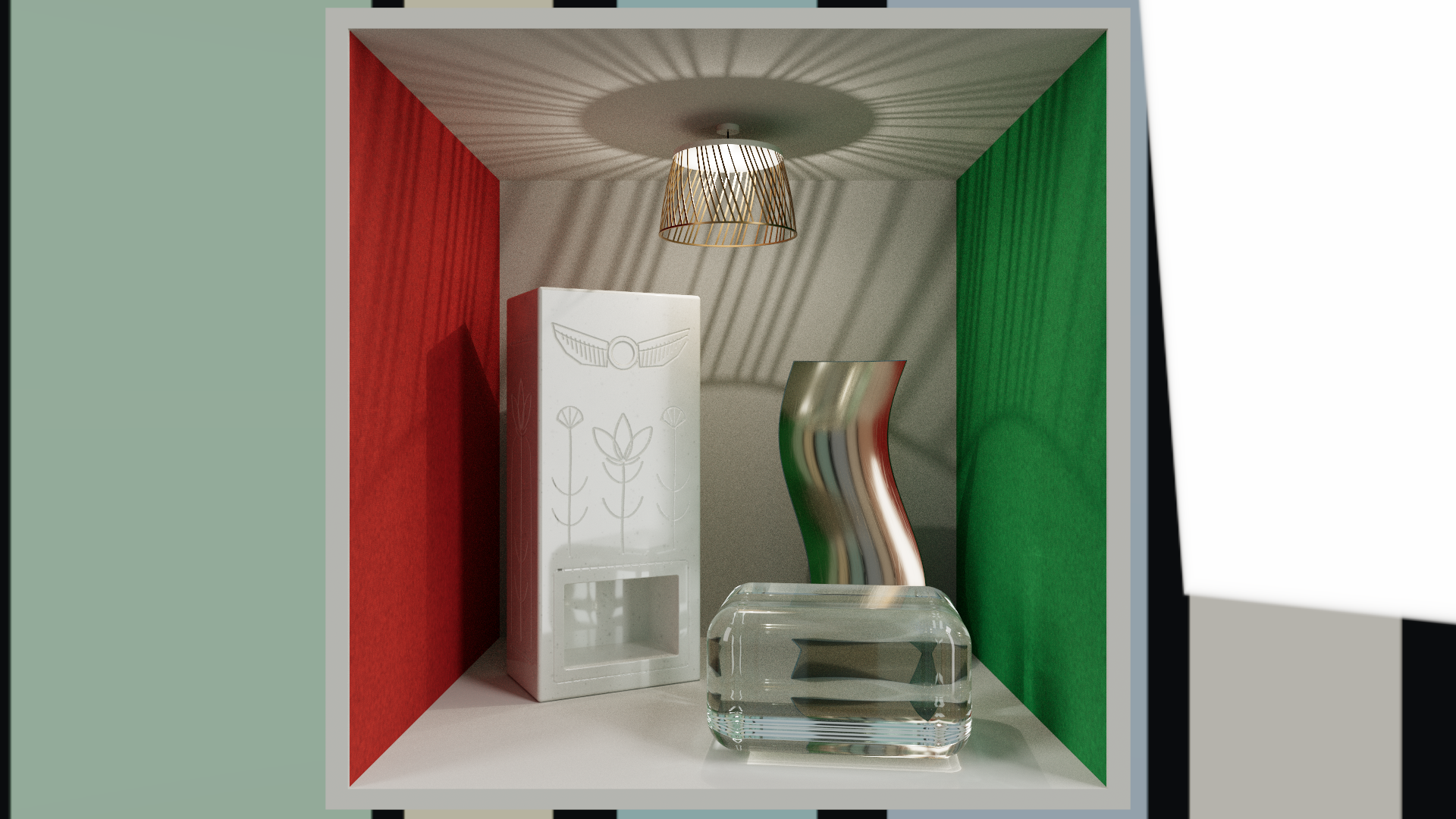
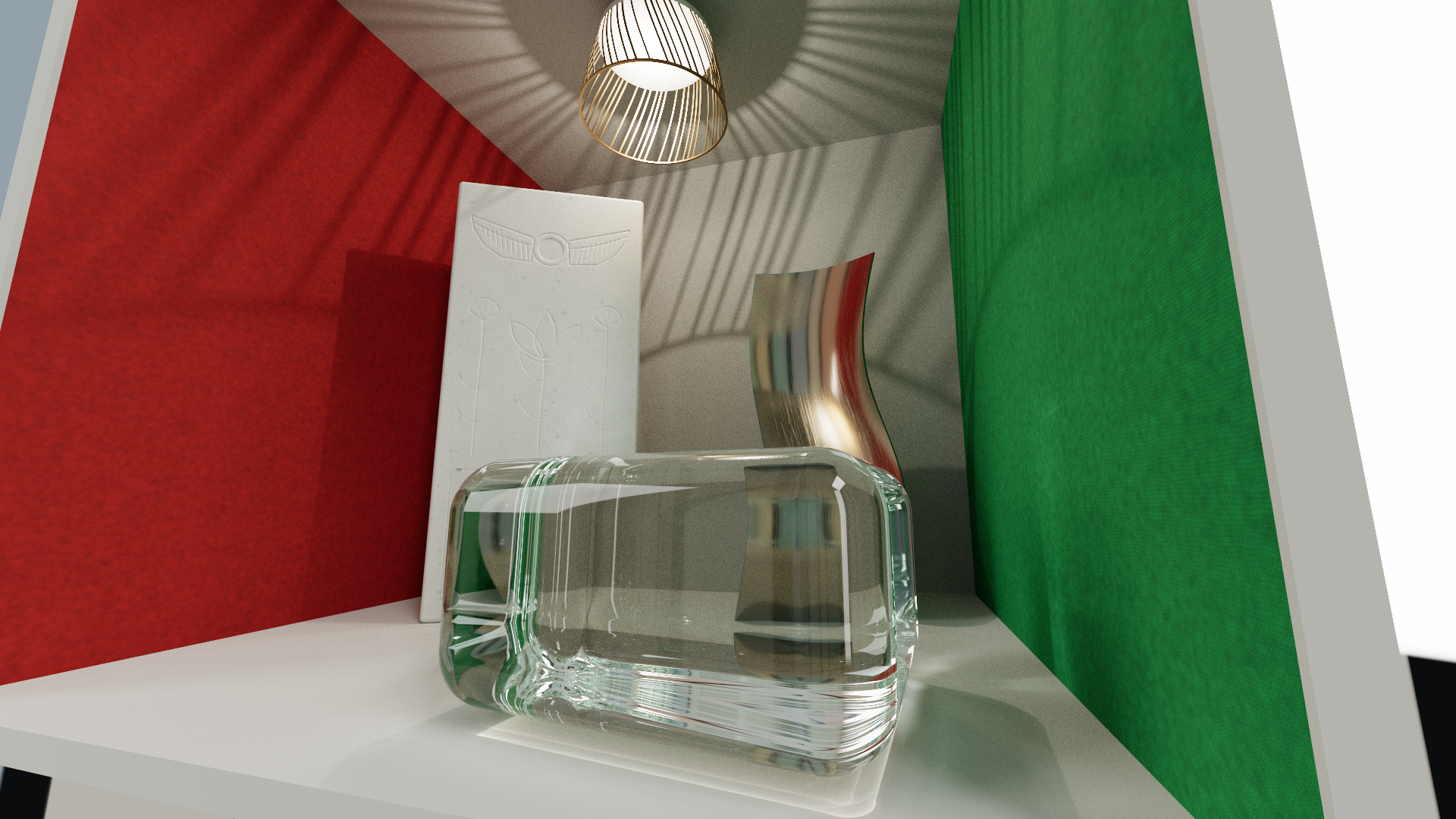
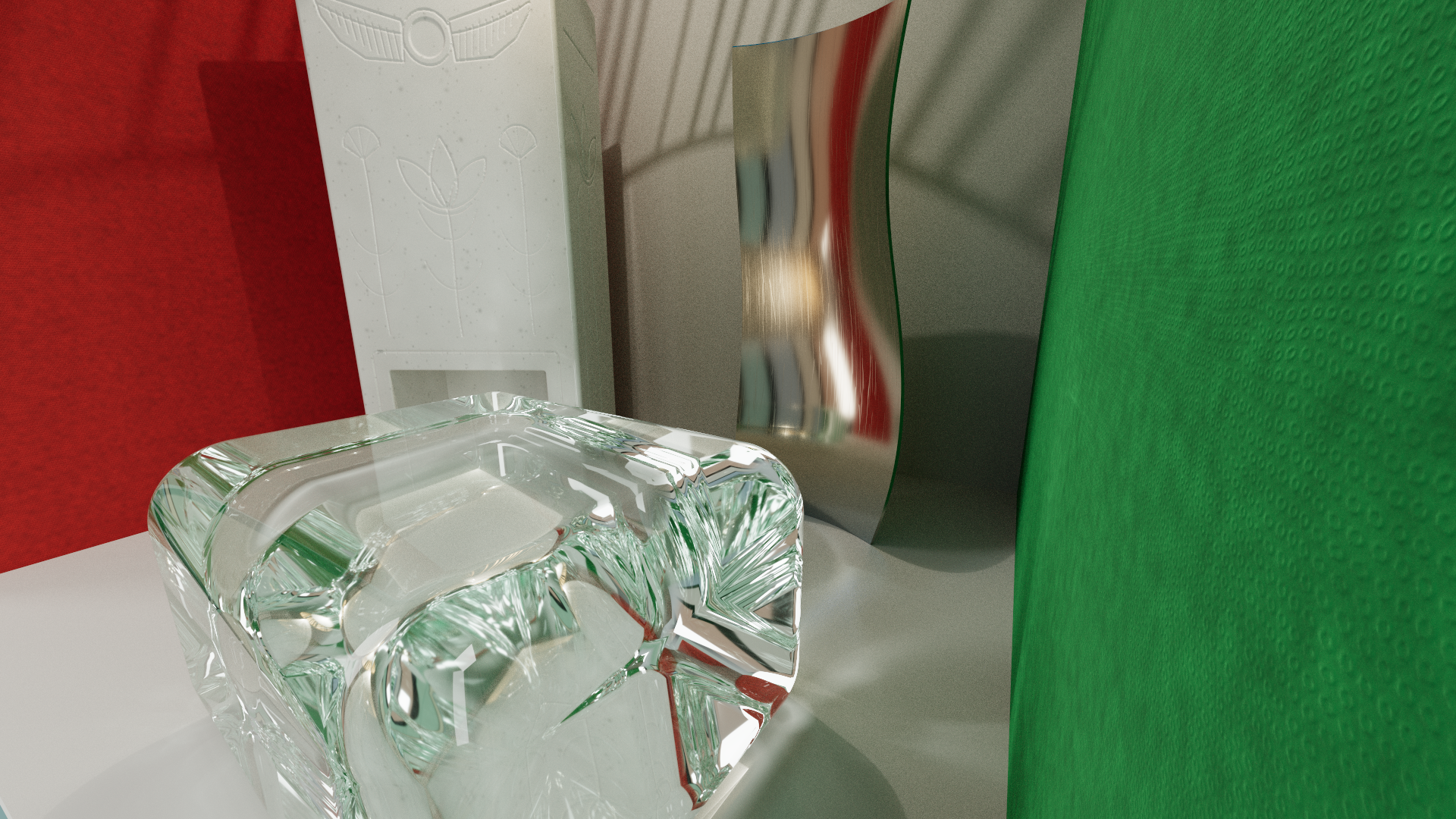
Path traced with BSDF sampling only (no NEE) and up to 64 bounces using Russian Roulette. 2,000,000 samples per pixel.
Download
License
The scene, its included textures, and the environment map are released under CC0 1.0 Universal. You may use, modify, and redistribute them, including for commercial purposes. Attribution is not required, but a citation is appreciated and remember CornellU for original Box.
Citation
@misc{boksansky2026cornellbox,
  author = {Bok{\v{s}}ansk{\'{y}}, Jakub},
  title  = {Cornell Box 2026},
  year   = {2026},
  url    = {https://boksajak.github.io/blog/CornellBox2026}
}